Color Correction
Can a Stylist Fix Orange Hair After a Bad Bleach Job?
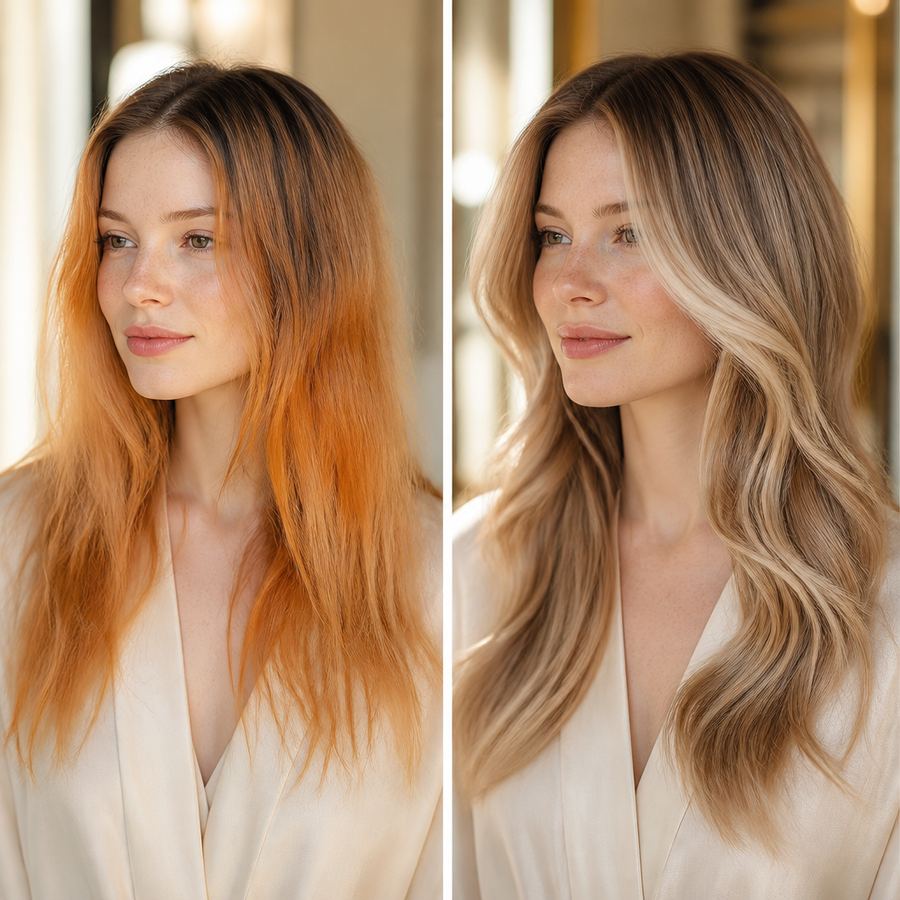
Yes, a skilled colorist can typically correct orange hair resulting from a less-than-ideal bleaching. This common color mishap happens when hair isn't lightened past a certain underlying pigment stage, leaving behind warm, brassy tones. Addressing orange hair requires a precise understanding of color theory and hair health. It's not just about covering up the orange; it's about neutralizing it thoughtfully, ensuring your hair remains strong and vibrant through the process.
Understanding Why Hair Turns Orange After Bleaching
When you lighten dark hair, it goes through several stages of underlying pigment, from red to orange, then yellow, and finally pale yellow. If the bleach is rinsed too soon, isn't strong enough, or isn't applied evenly, your hair might stop at that orange stage. This is particularly common with darker hair types that have more red and orange undertones. It's important to remember that bleach works by removing pigment, not by depositing a new color. When the lifting process is incomplete, those warm underlying tones become visible. Humidity in places like Boca Raton can sometimes affect processing times, making precision even more crucial during a bleach application.
The Professional Approach to Neutralizing Orange Tones
A professional color correction for orange hair typically involves applying a toner or a combination of toners with a low-volume developer. Toners work by containing opposing colors on the color wheel – in this case, blue/violet pigments – to cancel out the unwanted orange/yellow. Think of it like paint mixing: blue neutralizes orange. At Salon Sora, we often utilize professional-grade toners, such as those from Goldwell or Redken Shades EQ, customizing the blend to match the exact shade of orange in your hair and your desired outcome. This isn't a one-size-fits-all solution; it requires a keen eye and extensive color knowledge to formulate the perfect neutralizing mix.
Hair Health During the Color Correction Process
Correcting orange hair often means working with hair that has already been exposed to bleach, which can leave it compromised. Maintaining the integrity of your hair is paramount during any color correction. We carefully assess your hair's condition before starting any treatment. We might recommend pre-treatment conditioning or integrate bond-building treatments like K18 or Olaplex into the toning process. These smart products help reconstruct and protect the hair's internal structure, minimizing further damage. A healthy canvas always yields the best color results, especially when dealing with fragile hair.
What to Expect During Your Correction Appointment
When you visit for a color correction, your stylist will first conduct a thorough consultation. They'll examine your hair's current state, discuss the history of your bleaching, and understand your desired hair color. A strand test might be performed to see how your hair reacts to the chosen toners and to determine precise timing. Depending on the severity of the orange, the process could involve one or more applications of toner. Patience is key. Rushing the process or trying to go too light too quickly can lead to further damage. Your stylist will also advise on appropriate at-home care, including recommended sulfate-free shampoos and conditioners, and purple or blue toning products to maintain your corrected color.
Frequently Asked
How long does it take to fix orange hair?+
The duration varies depending on the intensity of the orange and your hair's condition. It can range from a quick toning session of 30-60 minutes to several hours if multiple applications or different techniques are needed.
Can I fix orange hair at home with purple shampoo?+
While purple shampoo can help to tone down *yellow* brassiness, it is generally less effective for strong *orange* tones. For orange, a professional blue-based toner is usually required to properly neutralize the pigment. Attempting a DIY fix often leads to uneven or purple-tinged results.
Will fixing orange hair cause more damage?+
A professional correction aims to minimize further damage. A skilled stylist will use low-volume developers, bond-building treatments (like Olaplex or K18), and carefully monitor your hair's health throughout the process. Discussing your hair's history and condition openly with your stylist is crucial.
The Salon Sora Puzzle
Play it now —
it's on the house.
Opens in a new tab · Free to play
Keep Reading